Your first trip to a farmers' market rarely follows the plan you had in your head. You go in meaning to buy "some vegetables," get waylaid by the smell of a bread stall, come home with a bag of tomatoes you didn't need and no idea where the eggs actually came from. None of that is a problem. A few small habits turn a pleasant wander into something you'll want to repeat every week.
Most markets run for four or five hours on one morning of the week, and where you land in that window changes what you come home with.
The first hour belongs to people who want the best of the day: the first asparagus of the season, the good sourdough, the eggs from the smallholding with a few dozen hens. Stalls are fully stocked, vendors have time for questions, and you can see everything without leaning past other shoppers.
In the final stretch, choice thins out but talk loosens up. A grower with half a crate of beans and a van to pack might prefer to sell you the lot rather than three beans, though don't count on a discount. And don't ask for one in the first half hour. It's the quickest way to make a poor impression on someone you'll see every Saturday for years.
Turn up empty-handed and you'll spend the morning juggling. Pack these:
Cash still moves fastest, but plenty of stalls take cards through a reader paired to a phone. The snag is signal: under a marquee in a crowded square, a transaction can stall halfway through. Ask "card or cash?" before they start bagging your shopping, and have the payment ready by the time they hand it over.
Some markets run token or voucher schemes as an alternative to cash, usually through an information point or a stall near the entrance. If you see one, it's worth asking how it works before you queue.
Don't take it personally if a vendor rounds to the nearest coin, and don't expect change from a large note first thing in the morning. Tipping isn't the norm at a produce stall. Coming back next week is the compliment that counts.
The stall itself is your best guide. Whatever is piled highest and sold in quantity is almost certainly local and at its peak. If something looks flawless and seems cheap for the time of year, ask where it came from and when it was picked. Most vendors will tell you straight.
Salad leaves, radishes, spring onions, rhubarb, asparagus, peas and the first strawberries. Buy small and often — leafy things wilt quickly once they're in a warm car.
Tomatoes with actual flavour, sweetcorn, green beans, cucumbers, berries, cherries, stone fruit and new potatoes. This is the season to buy more than you think you need and eat it within a few days.
Apples, pears, squash, leeks, cabbage, carrots and other roots, plus stored onions and potatoes. Hardy greens keep coming through the cold. Eggs, cheese, bread, honey and preserves tend to be available year-round, which is worth remembering when the produce table looks thin in February.
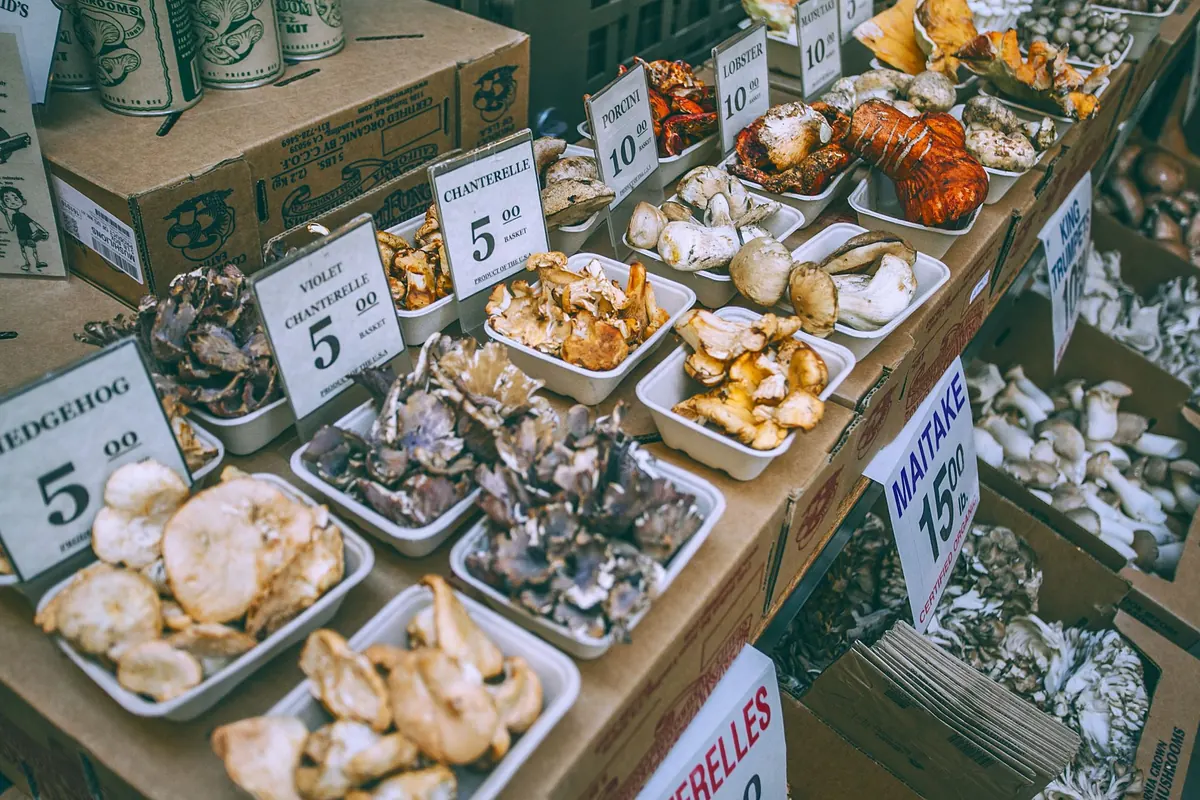
A chalkboard listing six things the grower brought in that morning usually signals a real farm. A stall selling the same twenty items all year, in identical trays, is more likely a reseller. That isn't automatically bad — resellers keep markets full and often stock things no local farm can grow — but it helps to know who you're buying from. Look for soil still clinging to roots, a few oddly shaped specimens, and variety names you don't recognise. Those are good signs.
If you have allergies or specific dietary needs, ask the vendor directly rather than guessing from a handwritten label, and get anything perishable into a fridge or cooler soon after you leave.
Check the market's day and hours before you set out, then keep the first trip simple:
That last step is the one people skip, and it's the one that pays off. A market isn't a single perfect shop; it's a weekly conversation with people who know what grew well this month. Go twice, buy something small each time, and by the third visit you'll be getting the good tomatoes set aside before you ask.
Photo: Maria Orlova / Pexels