Common Mistakes First-Time Severn Voters Make: A Local Election Explainer
Your first vote should be the easy part. You've picked your day, skimmed the candidate list, and told yourself you'll go after work. Then something small goes wrong — a name spelled differently on your ID, a polling station that quietly moved across town, a mark in the wrong box — and a five-minute job turns into a wasted afternoon. None of it is rare, and almost all of it is avoidable with one short check in advance. Here's what catches first-time voters in Severn out, and what to do instead.
Registration cut-offs land weeks before polling day, not days. Miss one and no amount of queuing will fix it. Two things surprise people most: registering does not automatically follow you when you move house, and turning 18 does not put you on the register by itself. If your address, your name or your circumstances have changed since the last election, your entry may be out of date.
Check now rather than on the eve of the vote. A call to your local election office, or a look at their online register checker, will confirm whether you're listed and at which address. And if you registered but no poll card has arrived, don't panic — cards go missing. Still, treat it as a nudge to confirm you're on the list.
A common Severn example: you moved from one side of town to the other in early spring, updated your bank and your doctor, but never touched your electoral registration. The register may still show your old flat. If you turn up at your new local station, staff may not find you at all. Five minutes with the register checker is cheaper than an afternoon of phone calls.
Voter ID rules have tightened in many places, and the two failures that catch people out are dull ones: the document has expired, or the name on it doesn't match the name on the register.
Store cards, library cards, work passes and out-of-date student cards generally won't do. Passports, driving licences and certain government or utility documents are more commonly accepted, but the list is set locally and it does change, so confirm it with your election office rather than assuming.
If you have recently changed your name, bring the document that shows both the old and new versions if you can. A marriage certificate or deed poll may not be on the standard list, but it can help staff untangle a mismatch. Better still, update your registration before the cut-off so the names line up from the start.
Polling stations get relocated for ordinary reasons. A hall is booked for something else, a school is mid-term, an entrance changes because of building work. You are assigned one station, and it isn't always the closest one to your front door. Turning up at a different station usually means a wasted trip, though staff can often tell you where to go.
Your poll card names the station and its opening hours. If it hasn't arrived, look the details up. Check the day before, check again on the morning, and check the entrance while you're at it — stations frequently use a side door rather than the main one.
In Severn, a station can move from a community centre to a nearby church hall, or from a school to a sports pavilion, with little more than a notice on the old door. If you arrive and the building is dark, don't assume voting has been cancelled. Check the official local election page or call the election office before you give up.
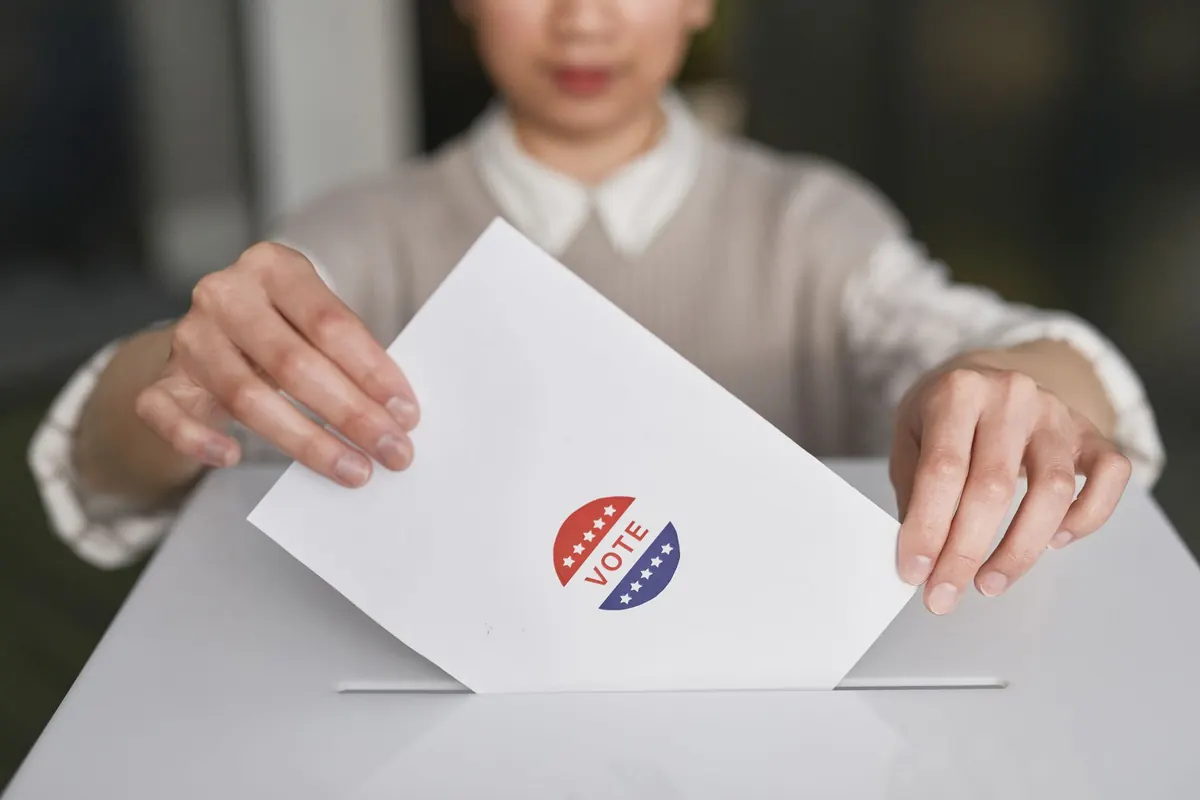
Spoiled ballots are the quiet frustration of election day, and most are accidents. Someone marks two boxes where only one was allowed. Someone writes a comment in the margin. Someone makes a large tick that spills outside the box, then adds an arrow to make it clearer, which makes it worse.
Read the instruction at the top of each contest before you pick up the pencil. Some contests let you choose more than one candidate; most don't. Keep your mark inside the box, keep it clear, and leave the rest of the paper alone.
If you do make a mistake, stop there. Don't drop the paper in the box. Hand it back to a member of polling staff and ask for a replacement. This is allowed nearly everywhere, and staff would far rather issue a second paper than watch a vote go in the bin. Don't photograph the completed ballot — many places prohibit it — and don't write anything the paper hasn't asked you for.
If you are not sure, ask. Polling staff would rather answer a question than spoil a vote.
Stations tend to be busiest in the first hour, over lunch, and between the end of the school day and early evening. Mid-morning and mid-afternoon are usually calmer. That matters if you're squeezing a vote into a shift, a hospital appointment or a childcare run. Allow twenty minutes even at a quiet time; a queue can build in five.
If you can, avoid the final half hour before polls close. That is when late arrivals, missing ID and last-minute questions all collide. You have the legal right to vote if you are in the queue at closing time, but it is a stressful way to cast a first ballot. Give yourself room to make a mistake and still fix it.
If you already know you cannot get to your polling station on the day, do not wait until the afternoon of the election to sort it out. Postal votes require an application before a fixed deadline, and the pack has to reach you and come back in time. A postal vote dropped off too late may not be counted, even if you filled it in correctly.
Proxy voting has its own deadlines too. You need someone you trust who is eligible to vote in your place, and they may need to vote at your assigned station or apply for their own postal arrangement. Start the conversation at least a few weeks ahead. If you are suddenly ill, stranded or called away for work, call your election office immediately and ask what is still possible. Sometimes there is a late route; sometimes there is not. Either way, you want to know before polling day, not during it.
Local ballots often contain more than one race. You might be voting for a council seat, a parish or town council, a mayor, a police commissioner or a local referendum on the same day. Many first-time voters study the big race, walk into the booth and then realise there are two or three more sections they have never thought about.
You do not have to vote in every contest. Leaving a section blank will not spoil the rest of your ballot. But if you care about local services, schools, roads, parks or housing, the down-ballot races can matter just as much as the headline one. Read the instructions on each page, mark only as many choices as allowed, and take your time. There is no prize for speed inside the polling booth.
Your poll card is useful, but it is not a permission slip. You can vote without it if you are registered and your ID is accepted. It tells you where to go, which is its real value. If you have lost it, do not assume you have lost your vote. Check your registration, confirm your station and bring accepted ID.
What you should not do is treat the poll card as proof that your registration is current. Cards can arrive at an old address, or after a move that was never updated on the register. If the details on the card look wrong, ring your election office before polling day. A two-minute correction now is much easier than a disputed vote later.
Photo: Edmond Dantès / Pexels