Two vans, one street, same evening. One is a supermarket delivery hauling a national shopping list; the other is a veg box packed that morning a few miles up the vale. Both save you the trip to town. They differ in almost everything else — what you pay, when it arrives, how long the spinach lasts, and how much of it ends up in the bin.
If you have been meaning to work out which one earns its place in your week, this is the honest comparison.
You book a window, fill a basket, and pay a fee that shifts with demand. The cheap or free slots are usually the ones nobody else wanted: early morning, late evening, midweek. In return you get range. Cleaning products, a specific brand of pasta, a birthday cake and a bag of ice can all arrive together, and you can order three items tonight for tomorrow. Substitutions are part of the deal, along with a minimum spend that quietly nudges the basket upwards.
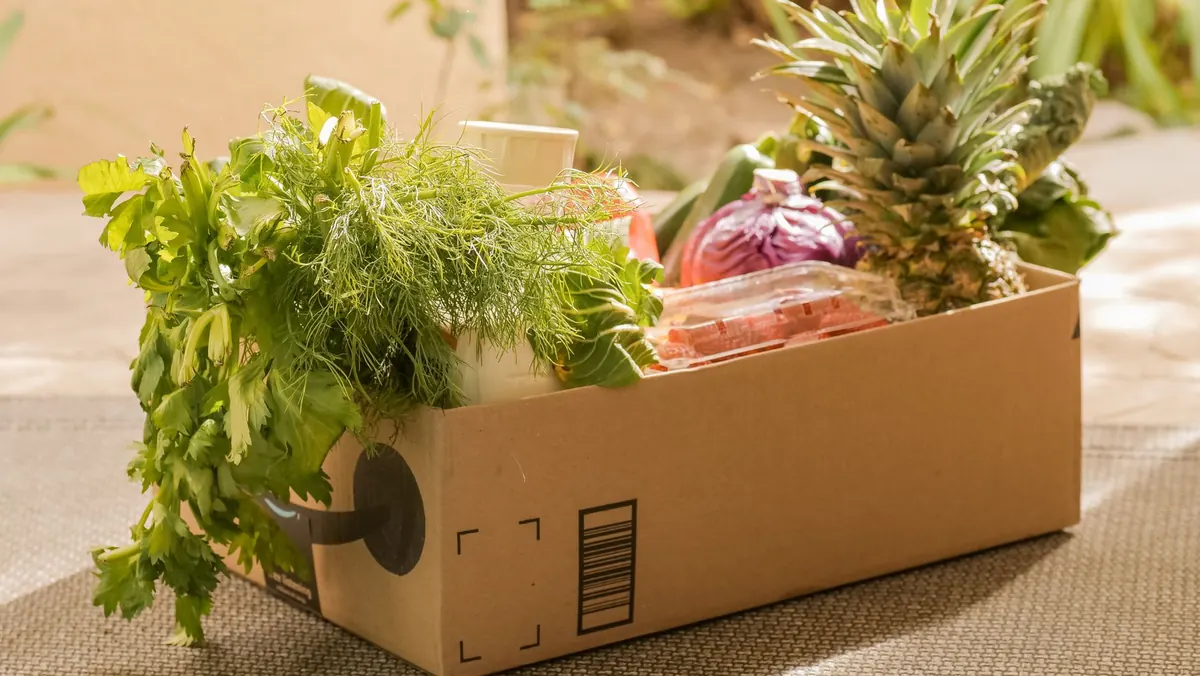
A grower or a small co-operative packs a set box on a schedule: weekly, fortnightly, sometimes monthly. The contents follow the season, so you eat broad beans in June and squash in October whether or not you had planned to. Some schemes let you swap items or add eggs, bread and milk; others send a fixed list and expect you to cook around it. The range is narrow, and that is the point — fewer decisions, fresher food, less choice at nine o'clock on a Tuesday night.
The delivery charge is the visible part. The rest is easy to miss, so add these up before you decide:
A box scheme often looks pricier per item and cheaper per meal, particularly in a glut week when the box swells with courgettes, runner beans or tomatoes. Supermarkets win comfortably on staples: flour, oil, cereal, washing powder, the things a grower will never pack. Many households run both, using the box for produce and the slot for everything else.
If money is tight, compare a full month of receipts rather than a single week, because delivery fees and harvests both swing. For anything beyond ordinary budgeting — debt, benefits, a household budget that will not balance — speak to a free, qualified adviser rather than a blog post.
Supermarket orders are forgiving. You can order late at night for the next afternoon, amend the basket after booking, and cancel without a conversation. The catch is competition for the good windows. In the run-up to Christmas, during school holidays, or when snow is forecast, the convenient slots disappear days ahead. Book earlier than feels necessary and set a recurring reminder on your phone.
Box schemes run to a fixed rhythm. Your delivery day is your delivery day, and the cut-off for swaps or a holiday pause typically falls a day or more before it arrives. Miss that deadline twice and you will be paying for vegetables you are not there to eat. On the other hand, you never have to remember to order at all — which suits plenty of people better than a weekly online shop. Some schemes also deliver to a shared pickup point, which can trim the cost but adds a walk with a heavy bag.
The real advantage of a box is the time between field and kitchen. Many Severn vale growers pick within a day or two of delivery, and it shows most in salad leaves, soft herbs, spinach and soft fruit. Supermarket produce is not old, and the supply chain is efficient, but varieties are often chosen for travelling and shelf life rather than flavour. For potatoes, onions, carrots and squash, the difference is small enough to ignore.
Expect less uniformity from a box: mud still attached, oddly shaped carrots, a cabbage the size of a football. Cooks tend to enjoy this. Anyone cooking for a fussy eight-year-old may not.
Packaging favours the box scheme, which usually arrives in a reusable crate with paper bags and the odd bit of film for leaves. Supermarkets have cut a lot of plastic, but a delivery still generates more wrapping than a crate you hand back. On the doorstep, plan for the weather. Ask whether your scheme uses insulated liners, leave a cool shaded spot, and in a heatwave bring the box in as soon as you can rather than letting greens sit in full sun.
Neither option is the moral high ground. A supermarket slot keeps a busy household fed; a box scheme puts good vegetables on the table and money into a farm a few miles away. Most people end up with a mix, and the right blend is simply the one that matches how you actually cook, shop and eat — not how you meant to last January.
Photo: Kindel Media / Pexels